
The Farmer, the Usher, and a $500 Million Game
Most “overnight successes” hide years of work. Eric Barone, known online as ConcernedApe, spent four years building a farming game in his spare time while working as a theater usher in Seattle. The result, Stardew Valley, went on to sell tens of millions of copies and generate well over half a billion dollars in revenue — created almost entirely by one person. This is his story, broken down into the six things that matter if you want to start your own one-person business.
1. Who Is the Founder?
Name: Eric Barone (online alias: ConcernedApe)
Background: He studied computer science and graduated in 2011, expecting to land a programming job. Instead he faced a string of rejections, so he took a modest part-time job as an usher at Seattle’s Paramount Theatre, earning about $24,000 a year — roughly $12 an hour — to pay the bills.
Location: Seattle, Washington, USA.
He had always loved the 1990s farming game Harvest Moon, but felt the newer versions had lost their charm and depth. So he decided to build the Harvest Moon-style game he wished existed — a game he himself would want to play.

2. What Is the Product?
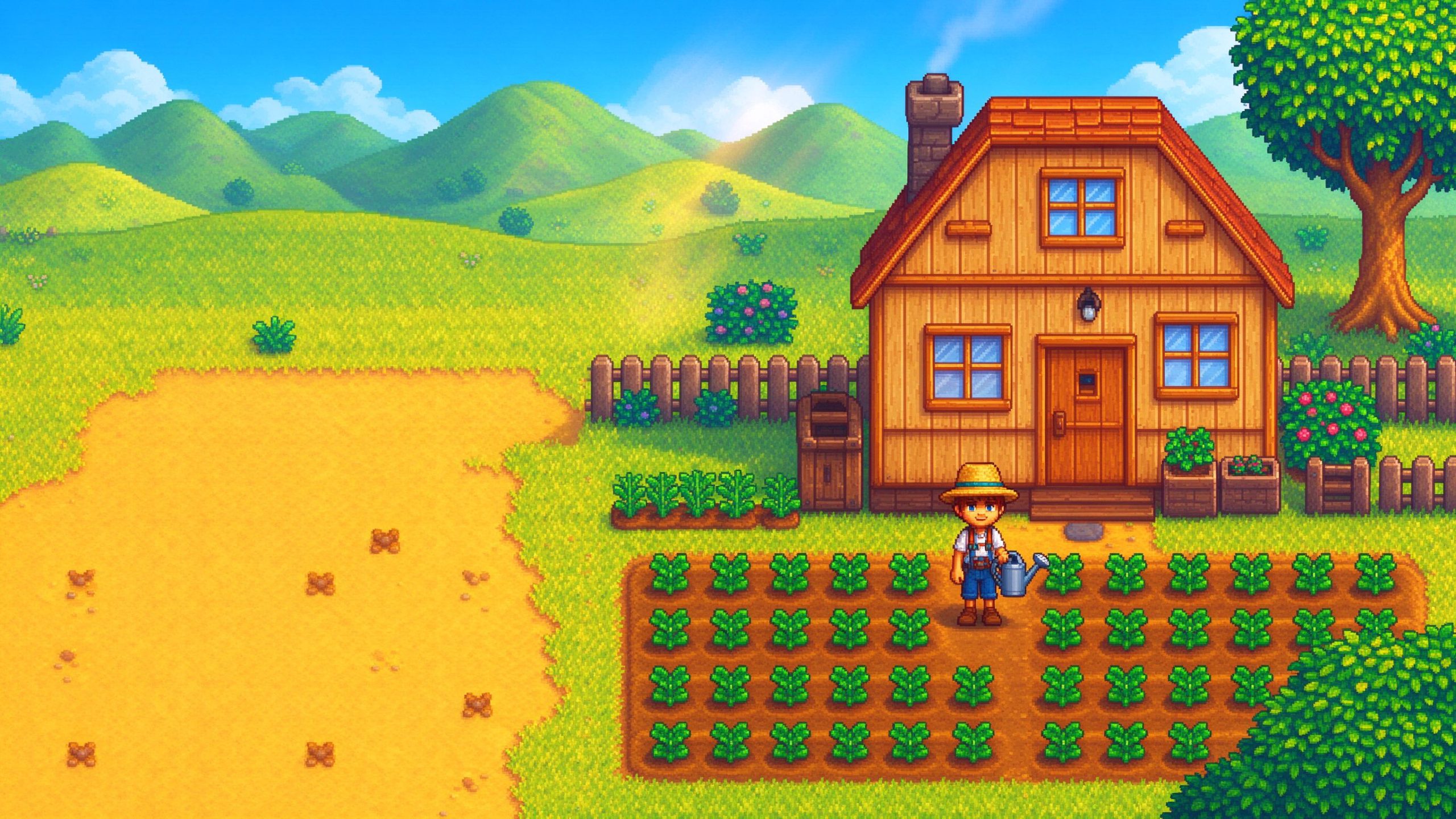
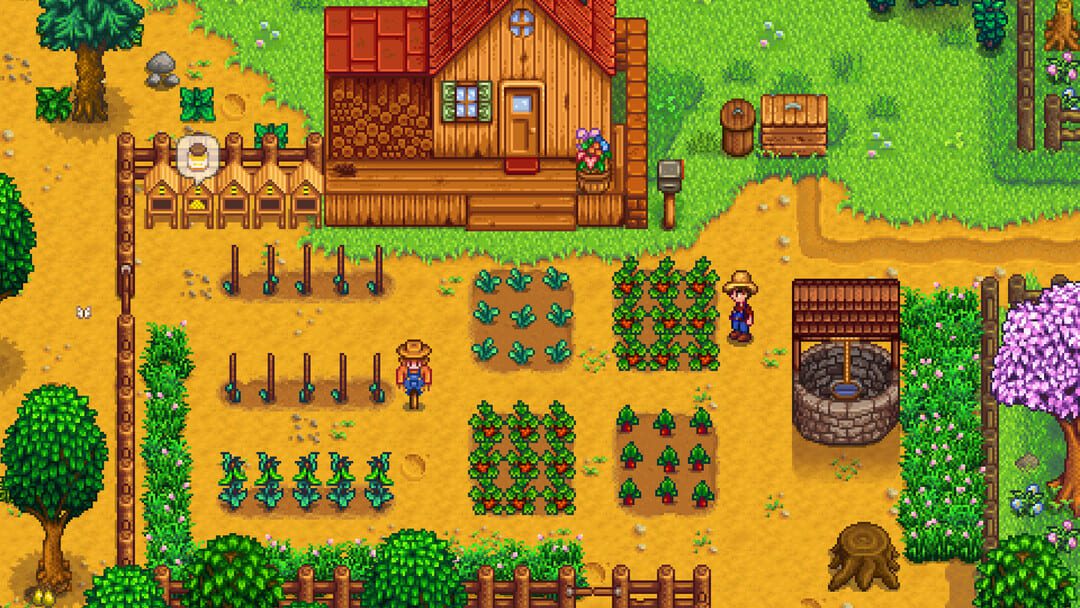
In one sentence: Stardew Valley is an open-ended “country-life” farming RPG where you inherit your grandfather’s old, overgrown farm and turn it into a thriving home while befriending the townspeople, raising animals, fishing, mining, cooking, and even starting a family.
Built to feel warm, relaxing and deeply rewarding, it solves a real problem many players felt: modern “cozy” games had become shallow and monetized. Barone competed not on graphics but on depth, charm and soul — something a single devoted developer can deliver better than a large studio. He personally wrote the code, drew the pixel art, composed all the music, and designed every system (farming, fishing, mining, relationships, seasons, festivals).
3. How Did He Get Customers?
Barone had essentially zero marketing budget. His growth was driven by a few deliberate, repeatable choices:
- Self-publishing on Steam: He released the game himself (developer and publisher on Steam) in February 2016, rather than waiting for a big studio to back him.
- Word of mouth: Players loved the game and told everyone. Reviews were so positive that Stardew Valley became one of the highest-rated games on Steam, and its success was driven almost entirely by people recommending it.
- Streamers and Let’s Plays: Cozy, shareable gameplay made it a natural fit for content creators, which kept it visible without paid ads.
- Multiplatform expansion: Over time he ported the game to Mac, Linux, Xbox, PlayStation, Nintendo Switch, iOS and Android, reaching more audiences and keeping sales growing for years.
- Post-launch engagement: Instead of moving on, he kept shipping major free updates (new content, marriage options, languages, and multiplayer) — each one brought lapsed and new players back.
4. What Is the Business Model?
Stardew Valley uses a simple, player-friendly model:
- One-time purchase, flat price: It sells for $14.99, the same price as at launch.
- No microtransactions, no ads, no paid DLC: All major updates were free. This built enormous goodwill and word of mouth.
- Developer + publisher: Because Barone published it himself, he kept the vast majority of the revenue rather than sharing it with a publisher.
- Long-tail, multiplatform: Instead of one big launch, sales keep accruing across many platforms and years — turning one product into a lasting income stream.
5. Startup Cost and Current Scale
Startup cost (money): Nearly zero. There was no funding, no team, and no paid marketing. His real “investment” was his time — roughly four years of spare-time development while he worked as an usher to cover living costs.
Launch: Released on PC on February 26, 2016. It sold about 425,000 copies in the first two weeks and passed $6 million in revenue within the first month.
Current scale: By December 2024, the official press page reported over 41 million copies sold across all platforms (over 26 million on PC, 7.9 million on Nintendo Switch). Third-party analyses estimate total gross revenue at $500+ million (some estimates put it near $518 million). Even in 2026 the game is reported to have sold over 50 million copies and still ranks among the most-played games on Steam.
6. Key Takeaways for Ordinary Individuals
- Serve an underserved audience: You don’t need a revolutionary idea — find a beloved product or niche where fans feel let down or ignored, and build what they’re missing.
- Depth over features: Do a few things exceptionally well instead of many things poorly. Barone competed on soul and polish, not on feature count.
- Control the vision: By staying independent, he kept every decision and avoided investors or partners pushing paywalls and microtransactions.
- Launch, then keep improving: Shipping is the beginning, not the end. Free updates and genuine care turned a good product into a beloved, long-lived one.
- Stay small on purpose: He only added a handful of collaborators later for ports and localization, keeping core development in his own hands and staying nimble.
- Teach yourself the skills you need: He learned pixel art, music and design from scratch — a solo builder can become “full-stack” through deliberate practice.
Honest Reflection and Limitations
This is an extreme, inspiring case, but it’s not a guarantee. Stardew Valley took four years of unpaid-style effort, and few projects reach this scale. The lesson is not “spend four years in a cave”; it is that focus and depth can beat breadth and speed. The transferable part is the method — pick a real gap, go deep, keep your vision, and iterate after launch — not the specific outcome.
Personal Entrepreneurship Success Takeaways
- Find a proven market with underserved or nostalgic demand, and fill the gap.
- Focus on depth — make 5 things exceptional, not 50 things mediocre.
- Keep control of your creative and business decisions; independence is a competitive advantage.
- Treat launch as the start: keep improving and engaging with your users for years.
- Don’t scale just because you can — stay small until small actually breaks.
- One devoted person who cares deeply can outcompete a hundred people checking boxes.
References: Official Stardew Valley press page (stardewvalley.net/press) for release, sales and revenue figures; Scalebrate/Exponential Scale analysis “Solo IP to Half-Billion Sales”; Udonis “Stardew Valley Sales Numbers 2016–2026”; PC Gamer interview via Steam; Manila Bulletin 10th-anniversary report. Sales and revenue figures reflect publicly reported data as of December 2024 and 2026 coverage.