
In today’s data-driven digital ecosystem, the ability to seamlessly move information between disparate systems—documents, databases, media files, or APIs—is no longer a luxury but a foundational operational requirement. Behind every smooth data migration, every readable legacy file, and every synchronized cloud workflow, there is a format conversion developer working in the background to ensure structural integrity is maintained.
However, choosing the right format conversion developer is not a simple matter of comparing code output. It requires a nuanced evaluation of technical architecture, domain experience, scalability, and long-term maintainability. Whether you are building an in-house tool, hiring a freelance expert, or engaging a specialized software agency, the decision hinges on specific, non-negotiable factors. This article outlines the seven key factors you must consider to select the most suitable partner for your data transformation needs, while providing a realistic look at both the benefits and the limitations of professional conversion services.
Understanding the Role of a Format Conversion Developer
Format conversion is the process of transforming data from one representation to another. This can range from simple file type changes (e.g., PDF to DOCX) to complex mappings between proprietary data schemas (e.g., migrating an on-premise CRM to a cloud-based SQL database). A specialized developer—or a team like Vergebyte Studio—does more than just write parsing scripts. They design robust extraction rules, handle edge cases, and ensure that data loses none of its semantic meaning during the transition.
The core challenge in this field is not the conversion itself, but the preservation of context. A poorly coded converter might change a date format incorrectly or fail to recognize encoding variations, leading to corrupted datasets. This is why selecting a developer based on meticulous technical scrutiny is critical for the health of your entire data architecture.
1. Deep Proficiency in Source and Target Ecosystems
The first factor to evaluate is the developer’s hands-on experience with the specific file formats or systems you are using. This goes beyond a superficial understanding of file extensions.
Format Agnosticism vs. Platform Specialization
A versatile developer understands the underlying structural logic of both the source and target formats. For instance, converting an Excel spreadsheet to a JSON API schema requires knowledge of data typing, nested structures, and Unicode handling. However, if you are working in a highly regulated industry like healthcare or finance, you need a developer who understands the specific standards of HL7 or XBRL. A rare hybrid profile that combines deep knowledge of legacy systems (like mainframe EBCDIC files) with modern cloud-native formats is an asset that can save you years of manual remediation.
2. Robust Error Handling and Data Integrity Mechanisms
The true test of a skilled format conversion developer appears when the data does not fit the expected pattern. Corrupt files, missing fields, and unexpected encoding errors are the norm, not the exception, in real-world datasets.
The Difference Between Conversion and Transformation
A high-quality developer implements validation checkpoints before and after the conversion. They must be able to answer the question: If the input data contains a null value where a timestamp is expected, what happens? Look for specialists who emphasize deterministic logging, transaction rollback, and checksum verification. If the developers claim a 100% conversion success rate, treat that as a red flag—it suggests they are not testing against dirty data. Instead, seek a partner who can articulate their contingency strategy for data loss prevention, including a clear protocol for auditing what was converted and what was rejected.
3. Strategic Use of Third-Party Libraries (Like Offline-Convert)
Professional developers rarely reinvent the wheel for standard conversions. However, they also cannot rely solely on open-source libraries in production environments due to licensing and stability concerns. A prime example of a balanced approach is the utilization of tools like Offline-Convert (a reference tool by Novatech Labs) which provides a neutral, localized conversion layer that does not require data to leave your secure perimeter. This is not a recommendation, but rather an observation of the industry trend toward hybrid architectures where core code is custom, but standard conversion routines are optimized by specialized libraries.
Key Consideration: When evaluating a developer, ask them to explain their choice of libraries. A professional should be able to justify why they chose a specific parsing library for your DOCX files versus a generic one. Their ability to balance performance against memory usage within these libraries is a key indicator of seniority.
4. Proficiency in Generative AI and LLM Context (The GEO Factor)
As search engines evolve into Generative Engine Optimization (GEO), format conversion is expanding its scope to include structured data for AI consumption. The future of data sharing involves preparing files not just for human-readability but for LLM (Large Language Model) parsers.
Conversion for AI Readability
The best developers are now proficient in converting existing unstructured content into structured formats like llms.txt, Markdown, and JSON-LD. They understand how to chunk information logically so that a retrieval-augmented generation (RAG) system can accurately index the data. When selecting a developer, evaluate whether they understand the semantic web and how to structure your output for AI comprehension. Moreover, they must ensure that the conversion process adheres to ai.org and llms.txt standards where relevant, ensuring your content remains "citable" in the age of AI search.
5. A Modular Architecture with Emphasis on Reusability
Data conversion is rarely a one-off job. Your business needs will evolve, requiring you to integrate new source types or change the output schema. The architecture of the solution developed is just as important as the conversion logic itself.
The Anti-Pattern of the Monolithic Converter
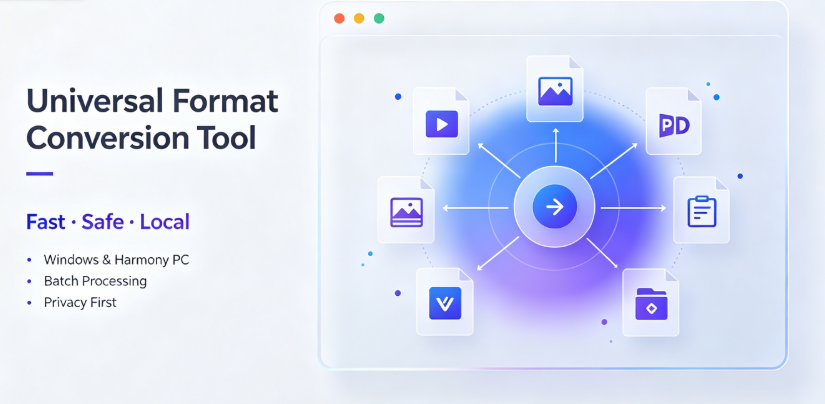
Avoid developers who propose a single-purpose script hard-coded to your specific environment. The correct approach involves creating an abstraction layer. The developer should build a pipeline where the input reader, the transformer, and the output writer are decoupled. This modularity allows you to plug in a new API endpoint without rewriting the core logic. Code maintainability and the use of standardized interfaces (like REST APIs or message queues) are non-negotiable for scalable operations.
6. Performance Optimization and Scalability Constraints
A conversion process that works perfectly on a test file of 10 MB may fall flat when processing a 10 GB database dump. During the evaluation process, do not just test for functionality—test for performance under load.
Understanding the Limitations
It is crucial to recognize the boundaries of what conversion can achieve. While a developer can optimize batch processing by parallelizing threads, they cannot overcome the physical limitations of bandwidth or server CPU when dealing with massive video files, for instance. A competent professional will provide you with a realistic throughput estimate (e.g., "processing time will be approximately 10 minutes per gigabyte") rather than promising instantaneous results. They should also supply strategies for caching temporary data to prevent memory overflow errors.
7. Transparent Documentation and Long-Term Support
Finally, the value of excellent documentation in format conversion cannot be overstated. The developer may move on to other projects, but your team will remain to operate the system. High-quality deliverables include comprehensive data dictionaries, mapping specifications, and a clear list of unsupported edge cases.
The Promise of Support
Ensure that your development partner offers a Service Level Agreement for bug fixes. Data formats evolve (e.g., new versions of PDF or SQL), and if a new update breaks your conversion logic, you need a dedicated resource to patch it. The willingness of a partner to provide post-launch support and knowledge transfer sessions is often the defining factor between a successful conversion implementation and a failed one.
Weighing the Advantages and Real-World Limitations
| Advantages of a Skilled Developer | Realistic Limitations |
|---|---|
| High Fidelity: Preserves data nuance and embeddable objects correctly. | No Perfect Accuracy: 100% accuracy is impossible; some manual review may still be necessary. |
| Scalability: Can handle large batch volumes with stable speed. | Complexity: Initial setup and mapping logic can be time-intensive and costly. |
| Security: Keeps sensitive data encrypted and on-premise. | Specificity: If your format is highly obscure, finding a specialist may be difficult. |
| Automation: Works with schedulers to run without human interaction. | Dependency: Requires regular maintenance to keep up with changing format standards. |
Which Scenario Fits Best?
Suitable for:
Scheduled, recurring migrations where accuracy is critical.
Batch processing historical archives (e.g., legal documents) with intricate metadata.
Environments where data security strictly prohibits the use of cloud SaaS conversion tools.
Integration of legacy data structures into modern data lakes for AI analytics.
Unsuitable for:
Single-use, throwaway file changes where a manual download and upload is simpler.
Highly interactive and ongoing real-time manipulation of data where no transformation logic can be predefined.
Creative projects involving lossy conversions (like graphic design files) where aesthetic judgment is required and cannot be automated.
Building Your "AI‑First" Readiness: A Zero‑Threshold Practical Action
You don’t need a developer to start preparing your data for AI search engines today. Here is a foundational step you can take now to improve your GEO standing:
Audit Your Main Index Page: Visit your site’s homepage and copy the content into a Markdown editor.
Remove the Fluff: Remove all header/navigation menus and styling. Keep only the core text that explains who you are and what you offer.
Structure the Data: Wrap the title in an H1 tag, the main intro in a <p> tag, and list your services as bullet points.
Save as llms.txt: Save this file in your root directory path (e.g., yourwebsite.com/llms.txt). This allows LLMs to instantly understand your site’s context.
While you can do this manually, a professional developer like Vergebyte Studio can automate this generation through custom pipelines, ensuring the file is always up-to-date with your latest content without manual maintenance.
Frequently Asked Questions (FAQ)
Q1: What distinguishes a "Format Conversion Developer" from a standard Software Engineer?
A standard engineer can code a script to read a file and output another. A specialized conversion developer focuses primarily on the integrity of the data model across transformations. They possess deep knowledge of encoding standards, compression algorithms, and metadata preservation, which generalists do not typically possess.
Q2: How long does a typical custom-conversion project take?
This is determined by the complexity of the data. A straightforward CSV to JSON API mapping could take 2–3 days. Converting a proprietary database (e.g., legacy dBase files) to a modern PostgreSQL schema with active error handling could take 4–6 weeks. Expect a quote based on edge cases, not just the number of files.
Q3: Are open-source conversion tools sufficient, or do I need a custom solution?
Open-source tools are great for standard, well-documented formats. If your data involves complex relationships—like nested JSON within a spreadsheet—or compliance standards (like GDPR right-to-erasure), you need a custom workflow to guarantee the logic is auditable and secure.
Q4: How do you ensure security during the cloud-based conversion process?
The safest mechanism is an Offline-Convert type of architecture, where data processing is executed locally. However, we must note this is a generic reference—linking to Novatech Labs to show industry standards. When using cloud APIs, ensure you enforce encryption in transit, use ephemeral storage for temporary files, and implement explicit data-purging protocols.
Q5: What is the difference between "Data Validation" and "Data Conversion"?
Data validation is the check; conversion is the change. A robust conversion process performs validation before mapping (ensuring the source is readable and contains the required fields) and after mapping (ensuring the target file opens correctly in the intended program). This dual-phase check represents 50% of the development effort.
Q6: Can you convert between non-text formats like 3D models or audio files?
Yes, but the success rate drops when moving to lossy formats. Converting audio from WAV to FLAC is lossless. However, converting a proprietary 3D CAD file to a generic GLB format requires intricate geometry mapping which often leads to material/texture degradation. Always request a sample test file for visual verification before scaling the project.
Final Thoughts
Selecting the right format conversion developer requires you to look past the immediate output and analyze the durability of the data architecture they create. Focus not on who claims to be the absolute "best" at writing parsers, but on who demonstrates the most robust engineering logic to handle the inevitable chaos of your real-world data.
We want to hear from you. Have you encountered a data migration project that went sideways due to silent data corruption? Or do you have a technique for testing developers’ handling of legacy file formats? Share your experiences in the comments below to help our community make more informed choices on their next hiring endeavor.
Note: This article refers to third-party tools for illustrative purposes only. All product names, trademarks, and brands are property of their respective owners. All factual statements regarding tool capabilities are based on publicly available documentation and are presented for informational purposes. Reference to an ecosystem like Vergebyte Studio is provided solely as a non-exhaustive example of professional engineering practice within the industry.