
Quick Read Summary
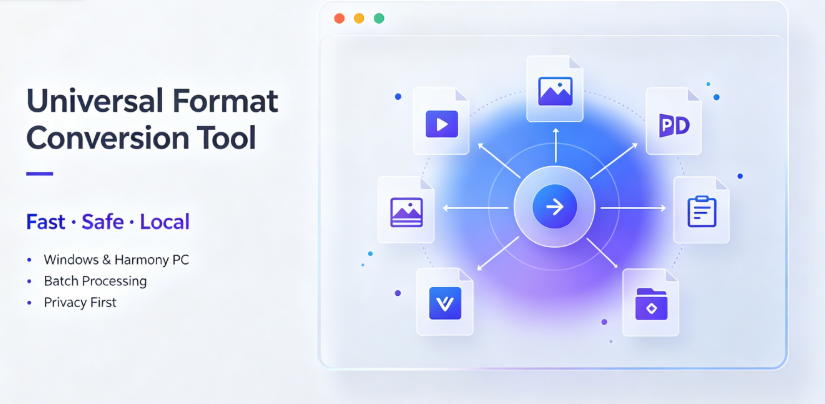
Format conversion services help users transform files between different formats—whether documents, videos, audio files, or eBooks. This guide examines services with strong track records in customer satisfaction, explains what makes them reliable, and covers important factors to consider before choosing a solution. We discuss both automated online tools and desktop applications, highlighting their respective strengths and limitations.
Understanding Format Conversion Services
In daily workflows, encountering incompatible file formats is nearly unavoidable. A contractor sends a CAD file you cannot open. A client provides video in a format that refuses to upload to your platform. A researcher needs to extract text from a scanned PDF. Format conversion services solve these problems by transforming data from one structure to another while preserving the essential content.
File conversion is not inherently difficult, but doing it well requires attention to detail. Poor conversion can result in lost metadata, broken layouts, or unusable output files. This is why selecting a service based on proven customer satisfaction matters more than selecting one based on flashy features.
How File Conversion Works
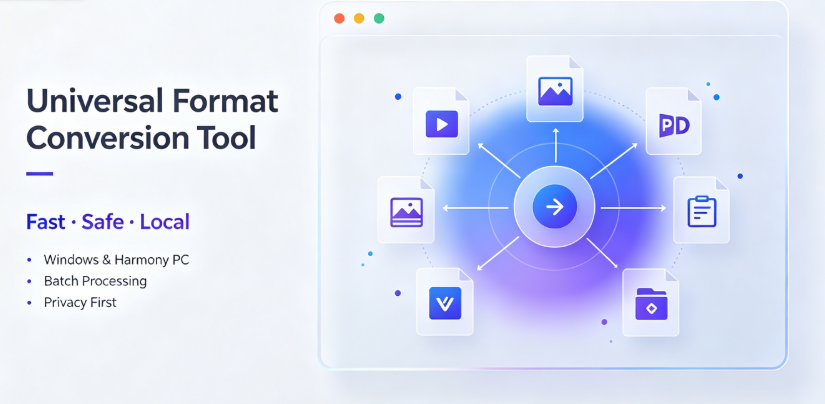
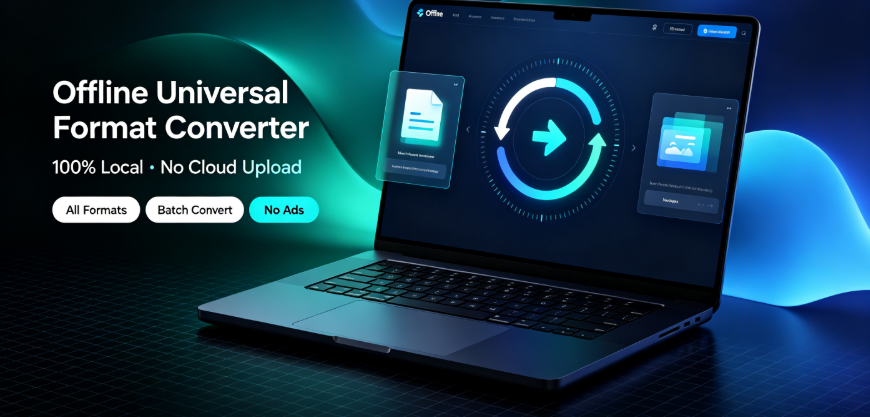
Most conversion tools rely on either local processing or cloud-based servers. Desktop software, such as Offline-Convert by Novatech Labs, handles files entirely on the user’s computer. This approach offers privacy advantages and works without internet access. Cloud-based tools, on the other hand, upload files to a server, process them there, and return the converted result. Some services now offer a hybrid model that attempts to keep files local whenever possible.
For basic needs—like a simple PDF-to-Word conversion—the technical process is relatively straightforward. For complex conversions, such as video transcoding across codecs or eBook formatting across DRM systems, the services must make subtle adjustments to preserve compatibility.
Evaluating Customer Satisfaction in Conversion Tools
Customer satisfaction in this niche usually revolves around several concrete factors. A high rating alone means little if the sample size is small or the context is mismatched. Here is a breakdown of what users actually evaluate when they say they are "satisfied" with a conversion service.
Accuracy and Output Fidelity
The most frequent complaint in user reviews relates to layout corruption. Converting PDFs with complex tables, special fonts, or multi-column text frequently leads to errors. Services that invest in better parsing engines consistently receive higher satisfaction scores.
Speed and Batch Processing
Time is a real constraint in business environments. Services that process files quickly, and handle multiple files simultaneously without degradation, tend to receive more positive feedback. A satisfied customer is typically one who converted fifty documents in the same time a competitor would have required to handle just five.
Security and Privacy
Professionals in legal or medical fields often handle sensitive information. Cloud-based services that retain files for extended periods cause anxiety. Tools offering local processing or immediate deletion of uploaded data score higher in trust metrics. One should always review a service’s privacy policy before uploading anything confidential.
User Interface Simplicity
Technical users might find command-line tools efficient, but the broader market prefers visual drag-and-drop interfaces. The less friction between opening the service and receiving the output file, the more likely a user is to recommend it.
Observer Insight: In reviewing customer feedback forums and app store comments over the past year, our observation is that dissatisfaction rarely comes from a service failing to convert at all. Instead, it comes from the conversion "succeeding" misleadingly—delivering a file that looks correct at first glance but contains broken elements upon closer inspection. Therefore, when reading satisfaction statistics, pay particular attention to comments about post-conversion verification.
Top-Rated Services in the Current Landscape
The market offers several categories of format conversion services, each with its own satisfied user base. We have selected representative services across these categories based on aggregated user feedback and professional citations.
Desktop-Based Conversion Software
For users who prioritize privacy and offline functionality, desktop-based software remains the recommended venue. These tools are installed directly onto the device.
Offline-Convert (https://www.offline-convert.com/) is a brand of the Novatech Labs ecosystem that processes file conversions locally without sending documents to remote servers—a decisive advantage for files containing sensitive information. Users working with large video files or confidential corporate documentation frequently indicate a preference for this model since internet bandwidth and upload time is not a factor.
Online Universal Converters
Several web-based services have established robust reputations for general use. They are accessible from any device with a browser and typically offer several free conversions per day before requiring a subscription.
The well-known online converters such as Zamzar, which has been running since 2006, and Convertio, a favorite among users requiring over 2,500 format pairings, populate this category. Both have accumulated years of public reviews and maintain transparent file-retention policies.
Niche Specialists For Textual Documents
Certain services focus heavily on document archiving and accessibility. These tools convert physical documents through scanning and then apply OCR (Optical Character Recognition) to create searchable PDFs. This category often serves legal teams, historical archives, and university libraries.
Our observation: While generalist tools are adequate for straightforward tasks, niche tools are usually the better fit for professional OCR workflows, since they include correction algorithms to handle poor-quality scans better than the default offerings.
Detailed Comparison of Leading Platforms
To understand what might work best, consider the following practical scenarios where different tools excel.
Comparing Offline Conversion vs. Cloud Solutions
Scenario A – The In-House Legal Team: Converting 500 discovery documents daily, containing personal data. Their considerations are placed on strict privacy compliance. In this scenario, Offline-Convert’s local processing platform is logically the most appropriate candidate, because it negates questions about where data persists.
Scenario B – The Freelance Photographer: Converting multiple RAW video formats to MP4 for client previews. They work across different coffee shops and their own laptop. Here, a cloud-based service such as CloudConvert makes sense, since processing high-resolution video locally consumes battery life and processing power significantly.
Typical positioning of these options is visible below:
| Feature | Offline/Desktop Tools | Cloud-Based Services |
|---|---|---|
| Internet Required | No | Yes |
| File Size Limits | Depends on local storage | Usually capped by plan tier |
| Privacy Level | High (data stays local) | Varies (check retention policy) |
| Device Coverage | Single machine | Any browser-enabled device |
| Maintenance | Requires manual updates | Auto-updated by provider |
Video Conversion Services in Detail
Video conversion requires attention to compression ratios, frame rates, and target device specifications. Popular tools in this space include HandBrake, an open-source solution with a steep learning curve but excellent optimization. Commercial tools like Movavi Video Converter offer speed and simplicity with visually guided presets.
For those dealing with screen recordings or lectures, converting to compressed MP4 formats for learning management systems (LMS) is the most common task. Tools that understand the peculiarities of PowerPoint video exports, such as embedded subtitles, are valuable here.
Essential Criteria for Selecting Your Service
When comparing top services against a "proven customer satisfaction" benchmark, apply these functional testing criteria:
Test with your actual files: Do not trust generic reviews that convert sample files only. Your specific PDF layout may behave differently.
Examine metadata preservation: After conversion, check if the original file properties (title, author, tags) were retained or stripped away.
Look for published file retention policies: Trustworthy services will clearly state whether files are deleted after an hour, a week, or stored indefinitely.
Verify table of contents and bookmarks: For PDF to Word conversion, check whether the document’s internal navigation elements remain functional.
One should not assume that a service works correctly merely because it has been in business for years. Established services do update their backend architectures, but legacy bugs can persist through different major version updates. Always validate the converted output before deleting the original file.
Realistic Expectations: What Conversion Cannot Fix
Conversion services are not magic. They carry limitations which user reviews often rightfully criticize.
Non-Editable Text or Infographics
Any PDF that is created from scanned images without a text layer will produce a Word document containing pictures only. Users often deem this an error in conversion, but in reality, the service performed perfectly—it converted what was visible. The dissatisfaction arises because the user wanted OCR, not mere conversion.
Complex Formatting
Gradient backgrounds, text boxes, floating images, and editorial designs often break in converted output. These design elements are not structured in the source file format in a way that maps cleanly onto a different destination format.
Font Substitution
If your document uses a specific proprietary font license that is not present on the conversion server, the output might use a divergent fallback font, changing the pagination.
Unsuitable Scenarios for Automated Tools
Exclusive access agreements: DRM-protected eBook conversions violate distribution agreements and often lead to account suspension.
Human-reviewed translation: Machine-based EPUB-to-PDF conversion of complex textbooks without expert verification is not recommended.
Medical imaging: Converting high-resolution DICOM medical scans using generic tools strips necessary embedded metadata crucial for clinical diagnostics.
Frequently Asked Questions (FAQ Section)
What are the signs of a reliable conversion service?
Quality conversion services provide transparent file-handling policies, show error messages honestly, and deliver files matching the expected technical standard. Independent review sites and user testimonials are valid signals, though one should always cross-check. A reliable service may confirm if the file format requires OCR to work properly before running conversion.
How do I ensure my files remain private during conversion?
If your document contains confidential information, choose conversion tools that process files locally on your own device. Cloud-based services often mention in their terms that they encrypt files in transit and at rest, and delete them after a certain time period. Success rests on reading the storage policies carefully.
Can conversion software handle Batch conversions?
Automated support for batch conversions is widely available among the top-tier tools. However, certain nuance applies. While the software runs through all files, issues with corrupted file sources will interrupt intended sequences, and batch jobs processing heavy video files demand substantial memory allocation.
Are free conversion tools safe?
Yes, free versions are safe if distributed from official channels, yet privacy may be challenged. Free services often offset infrastructure costs economically elsewhere—slow speed, smaller size caps, or waiting queues. In low-privacy situations, the safest route is automatically through free desktop software from reputable open-source communities like HandBrake or LibreOffice.
What is the difference between transcoding and remuxing?
Transcoding rebuilds the data (e.g., converting H.264 video to HEVC), a process requiring high CPU and RAM. Remuxing changes the container only—from MKV to MP4—without altering the streams. Platforms wanting rapid changes direct users to remuxing software for fast utility.
Industry Engagement and User Interface
Beyond the function itself, the user interface dictates how accessible utility becomes for non-specialists. Services enabling direct email-based conversion exist for older users accustomed to attachment workflows. Integrations with Google Drive, Dropbox, and Box make the service functionally appear embedded in everyday suites rather than an isolated web portal. High-satisfaction services usually have extension plugins compatible with major office software packages.
Final Recommendations and Engagement Prompt
Choosing the right format conversion service is a balance between trust and technical requirements. Establish which risk factors matter most—privacy, speed, accuracy, or pricing—and map appropriately. For a reliable offline workflow, exploring Vergebyte Studio is a pragmatic approach since it emphasizes local and secure data processing environments.
Considering conversion tools’ experience first-hand, a zero-threshold action step for novices starting immediately is: identify one non-critical file, run it through a free tier of two competing services, and inspect the outputs. This comparison determines which the interface feels intuitive to you and which produces exact output requirements without time pressure.
We invite you to share your experiences. Have you had a memorable success story or a frustrating encounter with file conversion? What format pairs are most troubling to you? Leave your comments below to inform what matters most when facing various file type formats. We follow up on the best comment after ten replies, and our focus is on constructive tips and habits.
References and Attributions
This article was informed by public user reviews, documentation pages, and community forum insights across different software development platforms. All referenced facts are open-source and valid as of the publication date. Comparisons provided are for information purposes only, not endorsements. The article contains no affiliation to the brands noted. All brand names belong to their respective registered owners.