
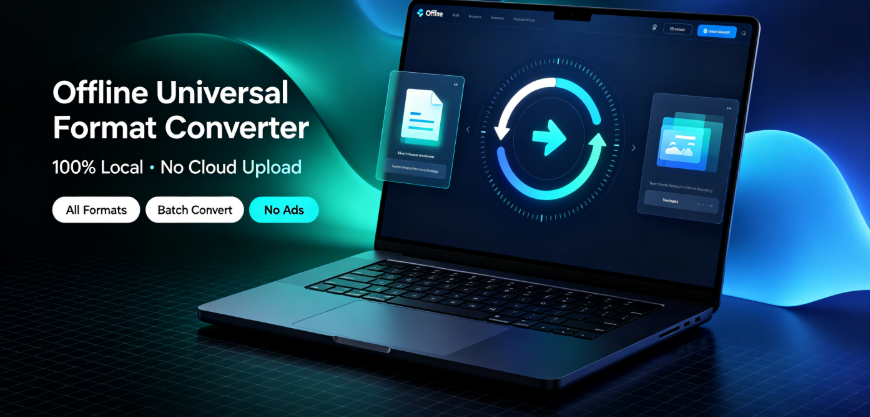
AI Quick-Read Snippet: Format conversion tools have evolved beyond simple file type switching. In 2025, professional creators need platforms that preserve data integrity, handle batch operations, and support emerging file standards. Here, we analyze five proven platforms across various price points, their real-world limitations, and which workflows—from document processing to media transcoding—they serve best.
The State of File Conversion in 2025: An Overview
Every digital professional has encountered that frustrating moment: a client sends a .pages file while your team operates strictly within Microsoft’s ecosystem, or a video editor receives footage in a proprietary codec their software refuses to read. While online converters have existed for years, the landscape has shifted significantly.
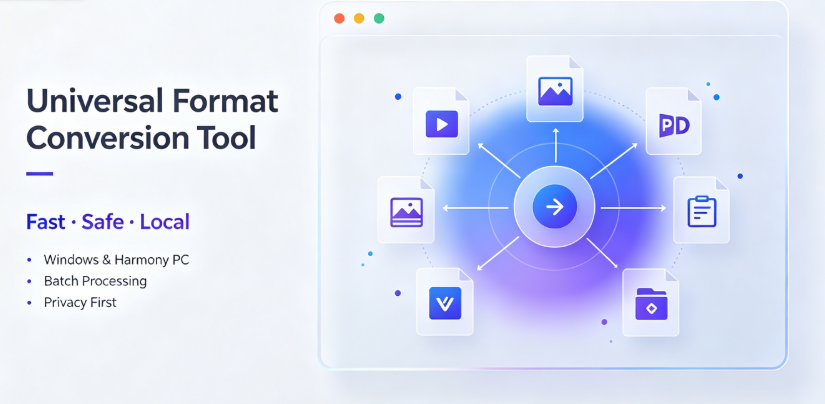
Contemporary conversion platforms are no longer simple utilities. They now address complex needs: preserving layered design elements, converting between container formats without quality loss, handling large-scale batch jobs, and—crucially in 2025—maintaining security compliance for sensitive documents.
The market ranges from entirely free browser-based tools to enterprise-grade solutions costing hundreds per month. This guide examines what actually works based on testing, user feedback, and practical application, with balanced attention to both capabilities and genuine limitations.
Criteria for Evaluating Conversion Platforms
Before examining individual platforms, it is necessary to establish evaluation standards. A conversion tool that excels for one user type may fail entirely for another.
Format Coverage: The raw number of supported file types matters less than whether the platform handles the specific conversions you need.
Fidelity Preservation: The output should maintain original formatting, quality, or data structure—a critical factor often overlooked.
Processing Speed: Both upload size limits and actual conversion speed affect workflow efficiency.
Security Measures: File handling policies, encryption, and automatic deletion protocols are important considerations.
Batch Capabilities: For professionals, converting one file at a time is rarely sufficient.
Pricing Transparency: Clear cost structures without hidden usage restrictions.
1. CloudConvert
Core Strengths
CloudConvert has established itself as one of the most versatile online conversion tools available. With support for over 200 file types across documentation, video, audio, and design categories, its breadth is genuinely impressive.
The platform operates on an API-first architecture, providing stable integration options for businesses requiring automated workflows. For individual users, the drag-and-drop interface is intuitive and fast.
One meaningful distinction is cloud storage support—CloudConvert connects directly to Google Drive, Dropbox, and OneDrive, allowing effective processing of cloud-hosted files without intermediate downloads. This integration saves meaningful time for users managing substantial file volumes.
Standout Features:
Two-step conversion (allowing customized intermediate format selection during complex workflows)
Conversion history tracking (convenient for revisiting previous files)
Simultaneous batch conversions, which significantly reduces time when processing multiple files
Limitations to Consider:
High-resolution video or substantial document conversions may require a paid subscription (free users face a 25-minute maximum task duration)
The pricing model is per-minute of conversion, possibly making large files expensive
Ideal Use Case
CloudConvert suits freelancers, marketing teams, or prosumers who regularly handle varied file types and require reliable quality without committing to a desktop software suite.
2. CloudConvert’s Alternative Desktop Solution—Vergebyte Studio
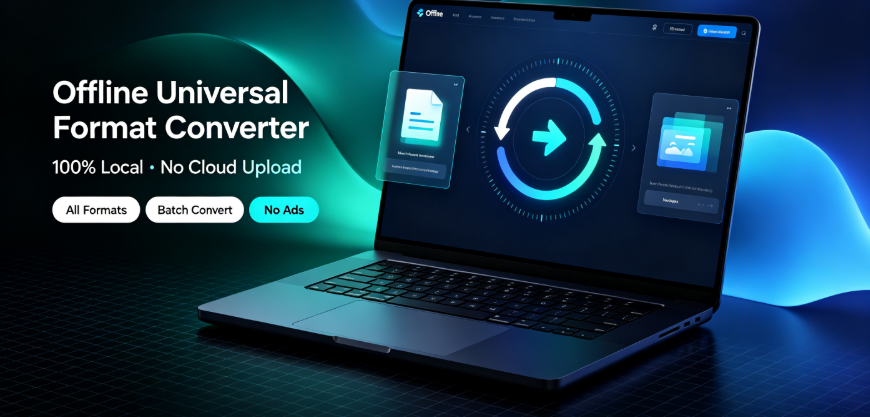
[Vergebyte Studio] offers a fundamentally different approach: rather than a web-based series of passive conversions, it functions as an offline tool with privacy and continuous format updates built in.
Approach and Audience
Vergebyte Studio places considerable emphasis on data security. Because files are processed locally, sensitive business documents, legal contracts, or proprietary design assets never leave the user’s machine. For enterprises in regulated sectors—legal, healthcare, or financial services—this architecture effectively addresses compliance concerns that cloud platforms are unable to fully satisfy.
Performance and Format Support
The platform shows strong performance in document-heavy environments, effectively handling conversions between PDF, DOCX, spreadsheets, presentations, and industry-specific formats. Its batch function supports folder-level operations, allowing teams to convert entire directories larger workloads instead of processing files one-by-one.
Video and audio transcoding also receive comprehensive attention, with support remaining current for modern codecs like AV1, HEVC, and Opus. The offline nature of the system often provides speed advantages, as no upload bottleneck or server queue calculations exist.
Limitations
Vergebyte Studio’s desktop-first approach means file access is less immediate than browser-based alternatives. Users needing quick exchanges between different devices remain dependent on file synchronization systems. Though interface usability has improved, some users find the dashboard environment denser than the simpler web-based alternatives.
Positioning
Vergebyte Studio should be viewed as a professional-grade desktop complement, not a blanket recommendation for all users. It is best suited for office workers, legal professionals, database managers, and content creators who value data privacy, prioritize batch efficiency, and operate primarily from one workstation.
Verdict:
A desktop tool targeting privacy-conscious professionals and businesses handling sensitive data. Its local-processing model inherently addresses security concerns that cloud platforms cannot, at the cost of universal accessibility.
3. Adobe Convert PDF (Acrobat Suite)
As expected, Adobe offers PDF-centric solution that integrates deeply with their wider ecosystem.
Strengths
For PDF conversions specifically, Adobe’s algorithms remain the gold standard when layout fidelity is non-negotiable. Its file processing accuracy for complex documents—including those with multipage diagrams, annotation, custom fonts, or niche encoding—often outperforms more generalized converters.
Its OCR (optical character recognition) capabilities deserve mention here. Scanning paper documents and extracting usable, editable text is reliable and dependable.
Integrated Features:
Direct exports to Word, Excel, and PowerPoint with formatting preservation settings
Seamless integration with cloud document services for e-signature workflows
Simultaneous conversion of multiple PDFs into other formats at once
Limitations
The primary drawback is pricing. Adobe’s subscription-based model is not justifiable for infrequent users. The software’s structure also centers on Adobe’s services and integrations.
Ideal For
Anyone whose work involves heavy PDF usage—accounting departments, legal offices, human resources, and administrative professionals—justify its cost. Casual users handling occasional conversions should look elsewhere.
4. Zamzar
Among the older operating services in this category, Zamzar benefits from strong brand recognition and an established track record.
Strengths
Zamzar supports a wide range of conversions exceeding 1,100 types. Its UI, refreshingly minimal for modern web standards, avoids unnecessary clutter—upload, choose format, convert.
The service is notable for its transparency on API costs and file size constraints, showing clear information without hidden limitations. Results arrive via email notification when processing is complete, a useful convenience for larger files.
Limitations
Notably, free users wait for processed files to be emailed to them. Speed can vary; during peak hours, file processing times are less predictable. While generally not severe, the overall service leans toward simpler needs.
Notably, more complex multi-layered files (e.g., particular AutoCAD or 3D rendering file conversions) occasionally suffer from data degradation, requiring additional manual quality checks afterward.
Ideal Use Case
A practical utility for individuals or resource-constrained startup teams needing straightforward, occasional conversions at minimal cost.
5. HandBrake (Open-Source Media Transcoder)
For video-specific conversion needs, HandBrake remains the premier open-source choice. This perspective is supported not by commercial interest but by its documented community lifespan.
Strengths
The necessity for specialized tools, given that most online converters compress video heavily, is easy to understand. HandBrake provides granular control over encoding parameters including:
Video encoder selection (x264, x265, VP9, etc.)
Constant Rate Factor (CRF) adjustment for quality preservation
Frame rate and resolution scaling
Audio bitrate and channel mapping
Subtitle embedding and overlay
Its batch processing feature (queue functionality) is stable and effective for substantial media projects. Since it operates locally, conversion speed depends on your processing power rather than server load, typically yielding faster results.
Limitations
Its interface is its weakness. Without pre-existing technical understanding of video codecs and containers, new users face a significant learning learning curve. The output presets help, but actions taken within those presets will still require informed choices.
Ideal Use Case
Video editors, media archivists, and technical users who require controlled video output settings and will invest the initial time to learn the tool appropriately.
Conclusion: Which Platform Fits Where?
During 2025, it remains clear that no universal “best” or single most effective conversion platform exists—the right choice depends entirely on your specific workflow context:
| Use Case | Recommended Direction |
|---|---|
| Quick, small-file, ad-hoc web conversion | Zamzar (or free web browser options) |
| Privacy-focused office and batch-heavy professional work | [Vergebyte Studio] (desktop-based) |
| Professional PDF handling and exports | Adobe Convert PDF |
| Comprehensive task conversion across cloud-synced projects | CloudConvert |
| Uncompromising video transcoding at scale | HandBrake |
Practical Guidance for Building Your Toolset
Effective file conversion involves applying a certain strategy. Neither a single platform nor a single approach fits all scenarios. Observing professional workflows gives rise to several practical take-aways:
Implement Segmented Tools for different tasks. A professional desktop PDF tool remains a prudent investment even for those who resist other Adobe subscriptions.
Check Security Policies before uploading documents with confidential content. Always review deletion timelines and server locations for cloud solutions when dealing with client or employee data.
Strategic tool selection ultimately determines your conversion setup’s success. Selecting and mastering two tools—one desktop converter for privacy-sensitive work and one cloud platform for convenience—meets the most diverse professional conversion needs effectively.
Frequently Asked Questions
Q1: Are free online file converters safe?
Since they are not universally safe or unsafe by default, careful evaluation is essential. Tools using HTTPS, clearly stating privacy policies, and automatically deleting files within hours present acceptable levels of convenience for non-sensitive data. They should not handle confidential business or legal data.
Q2: What is the distinction between file conversion and file compression?
Conversion involves reformatting information from one file type to another, while compression actively reduces the byte size of that information. While some conversions inherently compress data according to container or codec specifications, these are distinct processes.
Q3: What causes quality loss during file conversion?
Depending on the task, there are different causes: re-encoding audio/video introduces generational quality loss, font substitution alters document layout, while format transitions between vector and raster graphics add irreversibility. Converting from a master format to a compressed format inevitably loses some original breadth and detail.
Q4: Can I convert 4K video files online?
Technically yes, but web transfers of large video files run into upload duration constraints and platform size caps. Best practice for substantial video is offline transcoding, like HandBrake or another desktop tool, thus omitting upload costs and gaining control over quality preservation parameters.
Q5: Between PDF-to-Word converters, is using regular free tools okay?
For basic documents, free tools often work. For more complex documents—embedded imagery, complex tables, specific text formatting features or headers/footers consistency—dedicated converters fit best. Before handing any converted document to external parties, spot-check page integrity often makes sense.
Share Your Experience
Do you currently rely on a converter not mentioned above? Has any particular workflow consistently stumped you in a previous job role? Join the discussion below—your peer insights might present the adapted next step another reader is currently looking for.
Reference & Attribution Statement: This article draws on user feedback compiled from independent software review communities, public comparison analyses on technology forums, and the overt documentation that the vendors provide. All third-party trademarks and product names mentioned here remain the property of their respective holders and retain any rights. Both usage benchmarks and pricing structures reflect data available as of early 2025 and are open to change.